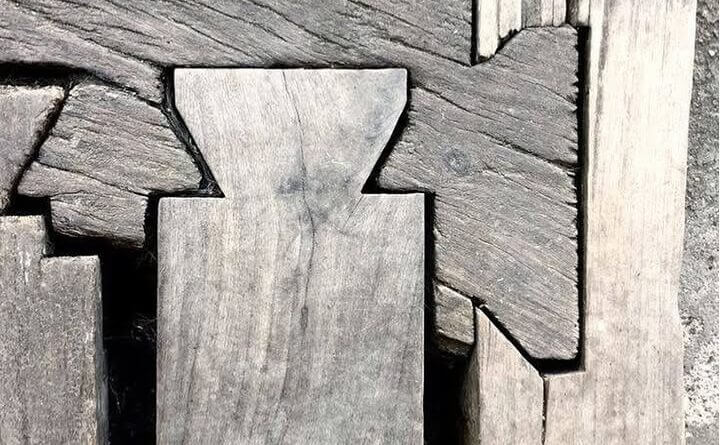
Japanese Timber Joint Uses Geometry Instead of Nails or Screws
A traditional Japanese timber joint, known as kanawa-tsugi or scarf joint, forgoes nails and screws in favor of precise geometry. The joint is designed to extend or repair beams and columns with a secure connection.
The connection is achieved through interlocking cuts and a driven wedge or key. Under load, the wedge tightens, creating a bond as strong as a solid timber.
This method exemplifies traditional Japanese woodworking techniques that emphasize craftsmanship and precision, eliminating the need for metal fasteners while maintaining structural integrity.
Source: Original Article